The Subtle Body & Martial Arts: A Conversation from Esalen
simon: Alright. So, you had questions from the students?
brandi: The first question was like, what was the thing? What is the CTR Subtle body and martial arts? What is that thing?
simon: Well, I have a spiel for that I’ve lifted from Jeff Kripal. The CTR is like Esalen’s Research and Development Wing, the R&D wing of Esalen. Where we're kind of forging ahead into the unknown country, as Mike Murphy puts it. With regards to all the things Esalen cares about historically: consciousness, embodiment, and the further reaches of human nature, exploring into these territories. Esalen is not a government entity, it's not a religious entity, and it's not tied into the complex world of academia and industry. So it's this wild, independent bastion where you can have conversations that you really can't anywhere else.
brandi: A true open forum.
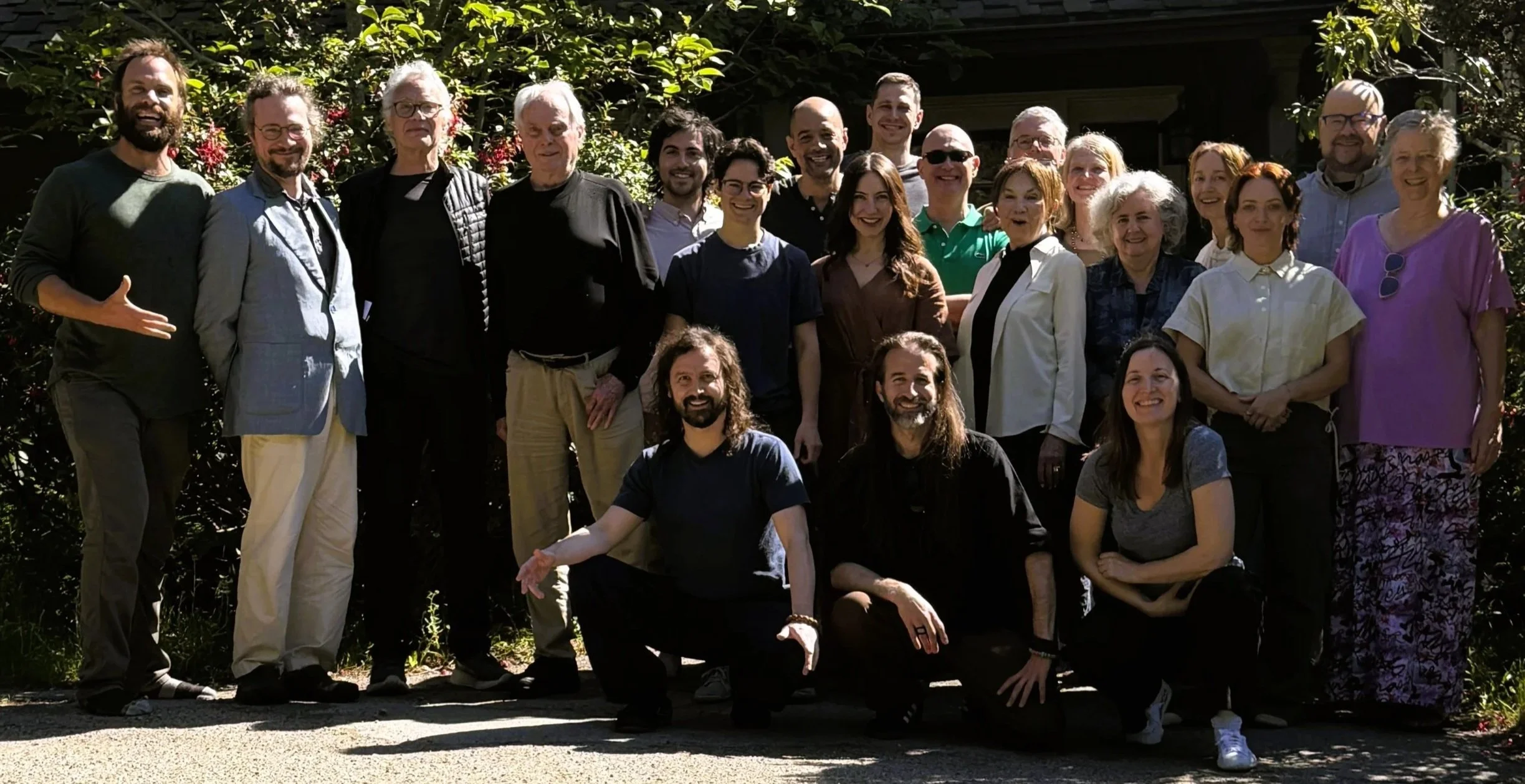
simon: That's the idea. In 2019, Mike Murphy and I started discussing the possibility of some kind of Subtle Body Initiative. A few years ago we began having conferences exploring this idea of the subtle body, which is the topic of my Ph.D. (The Subtle Body: A Genealogy, OUP 2022). This was the third subtle body CTR event and the first one where we did subtle body with a specific topic. This was subtle body and martial arts.
brandi: And I'll add, because coming from an academic background, you don't realize what people don't know about an academic conference. Even though this is outside of a university setting, it still has the structure of an academic conference. There are presenters who submit papers beforehand, which are circulated to the group, so you can read their paper. Then one by one they do a presentation followed by discussion. In this context, we had a half-hour presentation for each person, and about an hour of discussion, which is really nice and a flip of how it's usually done. Usually it's longer presentations and less time for questions. So it was a lot of sitting in chairs in a room.
So one of the next questions is connected to that: why was it all talking instead of moving and showing stuff?
simon: There was actually plenty of movement at this one. When I organized it, this is the first one I've ever taken the point on, I was not very courageous. I've been to a lot of these CTRs where there is more practice intermixed with the academic stuff, and I've never found it very effective or interesting. So I scheduled this one so everyone would give a paper and talk about it. But people still wove practice into their sessions, which ended up being very cool. There was a good bit more than I had anticipated.
brandi: There were at least three quite heavy demonstration presentations where people demonstrated a lot of different movement things.
simon: That is a recurring theme in the CTR, bringing together theory and practice. Esalen’s CTR ends up being this cerebral, theory-heavy branch, while practice is more the domain of the institute’s public-facing programming. But there are people who want to bridge those worlds more effectively. The public face of Esalen is workshops, yoga retreats, couples therapy retreats, things like that, or the Daoist Sleep Alchemy, if you come to my course!
It's a constant thing, the linking of theory and practice. A lot of these CTRs can feel exceptionally cerebral. We have a whole bunch of scholars talking for an entire week. Those of us who have practiced lives can grow impatient with that, which I understand, but I mean, it's the research and development wing. That's what we do.
brandi: I'm not a scholar, but I've been to scholarly events because I’m your plus one. This one, even though it was conversation format and a lot of talking, the way it was presented was really embodied. There were a lot of people there who were actually doing the things. That led to practice-based conversations, even though we didn't do the things together.
simon: That's a good point. Practice-based conversations.
brandi: Next question: were there different styles of martial arts represented and what styles were they?

simon: My initial idea for this conference was very multidisciplinary. I talked about European martial arts, Indian martial arts, Chinese, Japanese. But by virtue of my personal network, the people who said yes were mostly in the Chinese martial arts world, and more narrowly in the Wudang world. At a certain point I decided to make this the conference I really wanted to have, with a bunch of Wudang people there. About half the people were in that universe or adjacent to it.
We had two people representing Japanese martial arts. One represented an Aikido-inspired somatics modality, and another was in Ninjutsu.
brandi: And a number of people had casually done Tai Chi and Qigong in the past but weren’t currently practicing. And you did invite people from Indian and European martial arts, but they didn’t reply.
simon: If you don’t know who I am and you’ve never heard of Esalen, you might wonder, why you would reply to this email?
brandi: Next question: who else was there and why did you invite them?
simon: I won’t go through everyone, but the logic was this: at CTR events, we want conversations at a high level of analysis with people who have what you might call rhetorical generosity. People willing to entertain ideas and not so personally invested in a worldview that they can’t have broad conversations.
It’s difficult to find scholars who can speak at these levels. When you become a scholar, you’re disciplined into a particular discipline. Like there's a kind of, like something that happens to your mind. It's like it gets spanked and whipped into a particular shape. And once it takes that shape, then you are considered like an upstanding scholar and member of that particular discipline. That has the effect of stopping people from actually having conversations across boundaries, across disciplines.
Esalen is highly interdisciplinary, so we need people who are both extremely learned and open enough to talk about far-out ideas—from subtle bodies to telepathy, postmortem contact, reincarnation, even UFOs. It’s a wide range, though not completely anything-goes.
brandi: And I liked your answer about why there’s a focus on scholars. Esalen has this phrase: no one captures the flag. They don’t want to promote any one belief or system above all others. Scholars are trained to be more neutral. Practitioners can be very passionate about their system and forget it’s not for everyone.
simon: That’s right. Professors are kind of super unthreatening to Esalen because they're typically not very charismatic and so they don't stand any chance of capturing the flag. They’re smart, but it’s not like people are going to surrender their lives to them. Mike Murphy has had plenty of experiences with charismatic figures and has always aspired to make Esalen an anti-cult space.
And in the CTR you don't want to have gurus in either. You can't really have a conversation with a guru because they're Right. And they just have the Truth. I mean they'll share it with you, but they're not interested in having a conversation, not interested in anything you have to say.
brandi: What were some of your favorite parts of the week?
simon: These weeks are amazing because of the intellectual intensity and the interpersonal dimension—getting to know people during meals, in the baths. The group I invited included some of my oldest friends, so there was a lot of laughing.
How about you?
brandi: My favorite paper was Hussein’s. He talked about biohacking and optimization, but contrasted that with traditional cultures where people can do incredible feats—running long distances, diving in cold water—that can’t be explained in terms of contemporary scientific metrics. When asked how they break all these running records, they say they run to be together, out of love and compassion. Where’s the biohacking? There’s no way to measure that.
And I really loved meeting, hearing David Palmer speak. He's highly regarded sinologist who went into the interrelations bewteen the civil and martial dimensions of Chinese religions.
His framing really helped me kind of place our system and our school on the spectrum of martial vs. civil, and place where what we learned in Wudang fits in the greater world of martial arts.
simon: Yes I loved his framing of the civil and the martial as they apply to cosmology, history and reality. He said that they persist in this fractal duality, so you never arrive at a true maximum martial or a maximum civil, there's always a civil within the martial, and the martial within the civil, like a yin yang symbol.
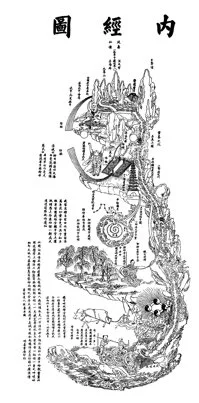
And so the Yang in our training was obviously the martial arts. But Palmer actually pointed out that what we thought of as like the lowest brow part of our training is already like extremely literary and elevated, because even something like our hard martial arts training is training an exceptionally specific discipline and pertains to the cultivation of a kind of literary body. I mean, if you come to our school or if you look at the kind of ordination manuals we got in the San Feng lineage, there's the depiction of the Chart of the Inner Landscape 内景图 or the Chart of Cultivating Reality 修真图 these kind of bodymaps of the inner landscape of the body, and they’re both full of language.
So it's a highly literary body that you're cultivating in these practice. So even in the most martial dimensions of our training, there’s a sense in which we’re actually still engaging in literary pursuits. And then of course, the most elevated thing in our lineage is the inner alchemy and the ritual Complete Perfection 全真 practice. And David’s like, these are literally the most elite, literary dimensions of Chinese culture.
brandi: Yeah.
simon: So I always placed us much lower on that kind of martial to literary spectrum.
brandi: Yeah, me too. But he's comparing martial arts with all sorts of other forms of Daoism, including spirit mediums and things like that.
simon: Yeah.
brandi: Which are regarded as like extremely kind of low class.
simon: Yes.
brandi: And I don't say that to be derogatory. It's like, Daoism for the people, by the people. Yeah. It's very localized, local deities, things like that. Whereas the larger sect of Complete Perfection Daoism, of which we are a sub-lineage, is quite structured, quite literary, as far as Daoism goes.
simon: To put it in kind of terms that like historians of religion might use, China has always had this tension between locative religion, so religions like spirit cults that are specific to a particular village or mountain. And then non-locative religion, which is this the grand religion of the Chinese state.
And so this is kind of some Daoist studies scholars have talked about how in the earliest kind of Daoism, priests in like, you know, basically from the Han dynasty on, were going from mountain to mountain with essentially a kind of comparative religions discourse to relativize these relationships between all of these local religious cults.
Deities and spirit mediums. Because they're often at war with one another. Like the spirit medium is this village would say, go kill that village. And so then the kind of emperor would send a Daoist in to be like, actually, your village is water and that village is fire. And so you naturally have this antagonism, but it was resolved peacefully by the logic of the five elements.
And so David's really been on the ground. He showed us videos from ethnography he did in the early 2000’s, looking at a kind of the Civil and Martial, tents in a Chinese religious celebration in a very rural setting.
brandi: It was so cool seeing David's ethnographic research there and also seeing Jean’s Debernardi’s research on Wudang mountain.
simon: Yeah, and she had a video of a guy being possessed by Zhenwu, the patron saint of wudang mountain. She did most of her research in Penang, in Malaysia, but also in Singapore, and which led her eventually to Wudang because she found so many people in these Chinese diaspora communities venerating Zhenwu, and so she ended up with tons of research on this stuff.
So part of what I wanted to do with this CTR particular, and this is kind of what we're doing with this sort of body initiative, is we're not just trying to like nail things down.
We're not trying to determine the actual number of chakras or whatever. We're trying to expand things. And so, as Michael Lifshitz said at the conference, we're trying to establish like a broad panorama of subtle body broadly construed across the world's traditions. And I was trying to do the same thing with martial arts, because I think particularly in our culture people conceptualize martial arts through a very narrow lens.
brandi: You're punching. You're kicking. You're throwing.
simon: Yeah. And maybe if it's like a fluffy martial art it has a health or spiritual dimension.
brandi: Right.
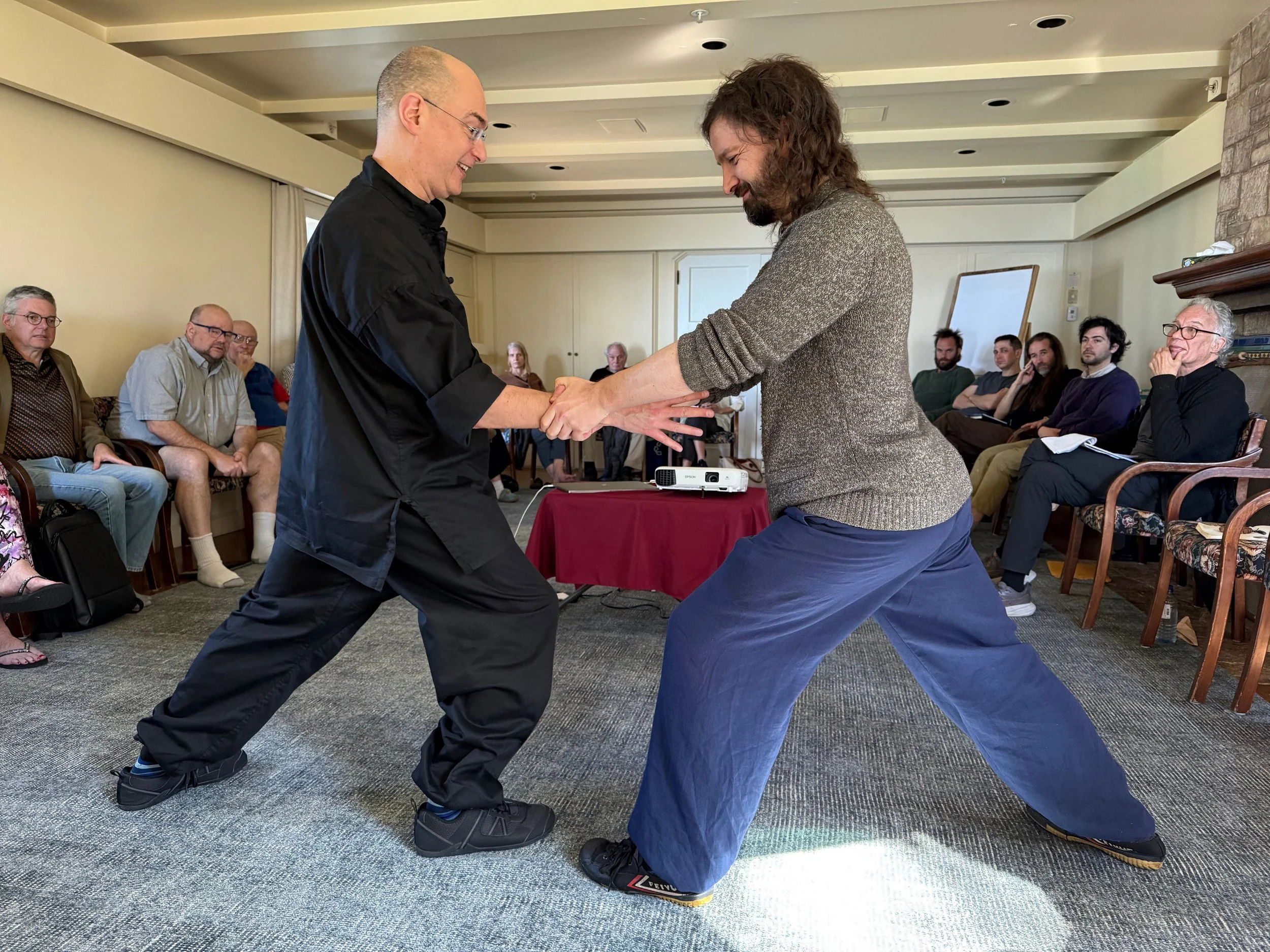
simon: But from a historical perspective that's an extremely impoverished point of view that kind of comes right out of the heart of modernism, basically out of statist and fascist movements from the late 19th and early 20th centuries, that specific view of martial arts as just combat. And so from a more capacious, historically-informed perspective, martial arts is this very broad thing that extends all the way from spirit mediumship to battlefield magic, to theater and dance, to warfare. And it's all interwoven throughout history. This paring down to martial arts as grounded only in fighting is a very recent development, and direct outgrowth of fascist historiography. So through assembling this group I’m working toward expanding people's understandings of what martial arts even is.
brandi: You’re forging an anti-fascist view of martial arts?
simon: Yeah. Also it’s also in Esalen’s DNA, this kind of anti-fascist stuff, and so I was trying to do that for how we conceptualize the martial artistic.
brandi: There were moments where you’d think, what does this have to do with martial arts? But by the end, it all came together. It expanded my view.
simon: Yes, even for me. Seeing it and discussing these far out dimensions of the martial arts does something that simply reading about it does not.
brandi: How do you think this week will change how you teach?
simon: I don’t know yet. It takes me weeks to sort through these CTR’s every time I go.
brandi: I think I’ll be less stingy with theory. I’ve really emphasized embodied practice—just practice—but now I see how sharing ideas can enrich that. You never know what will resonate with a student.